
Biblioteca Nazionale Vittorio Emanuele III – Naples
An extensive analytical investigation was carried out on seven manuscripts, consisting of two late antique purple codices and five Renaissance manuscripts with purple pages.
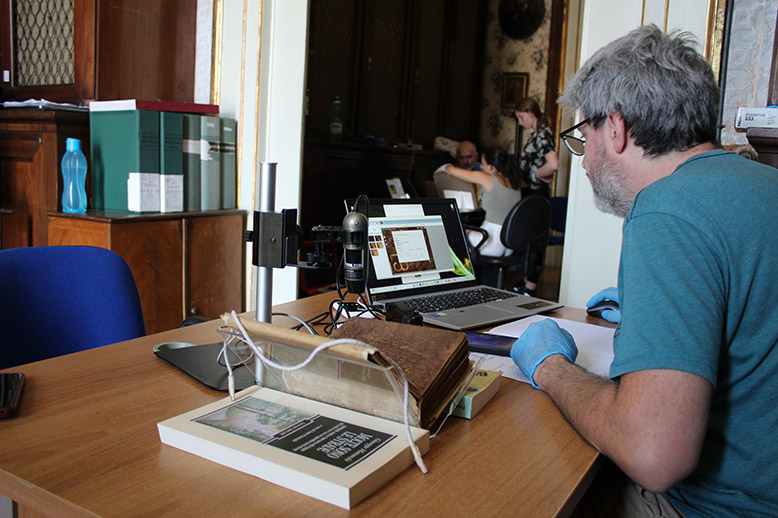
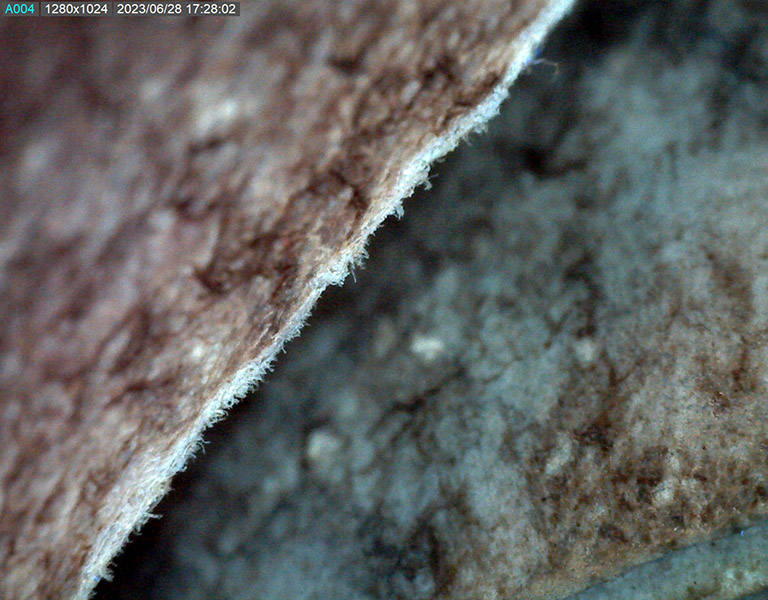
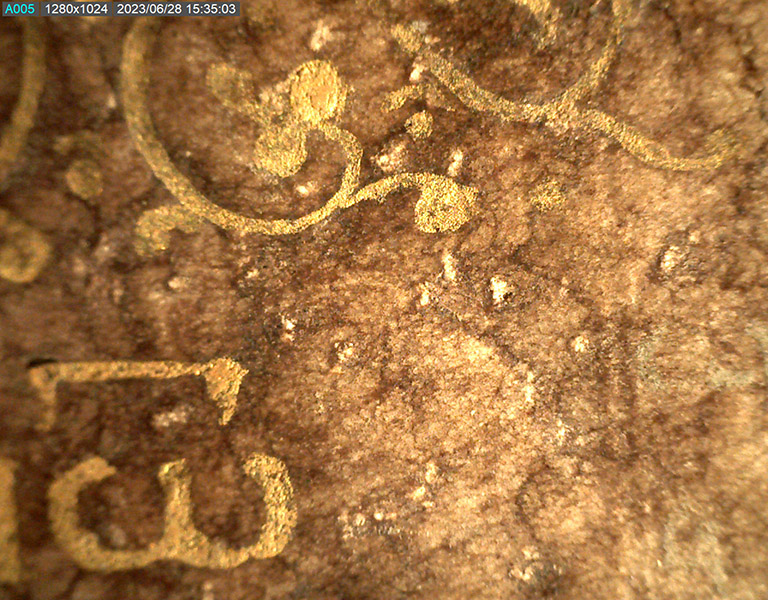
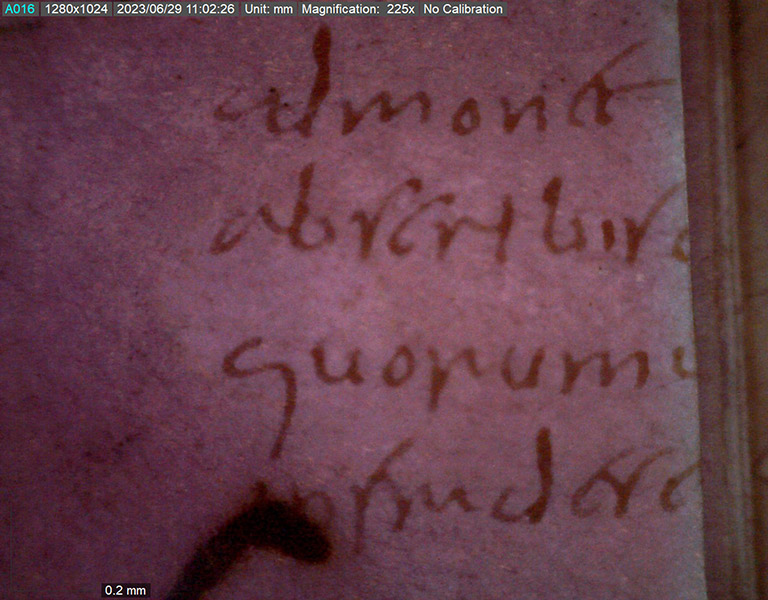
Each codex was carefully examined to verify its integrity. Portable digital microscopy (both visible and UV) was used for the preliminary documentation and classification of the materials.
 |
 |
 |
 |
|
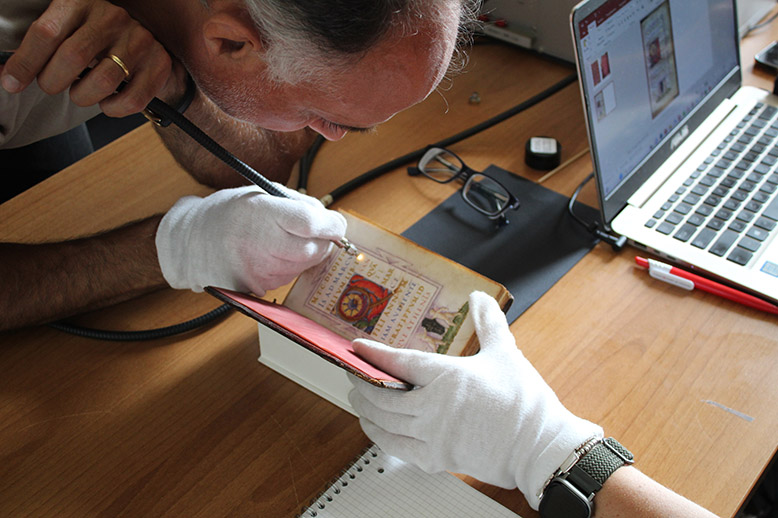
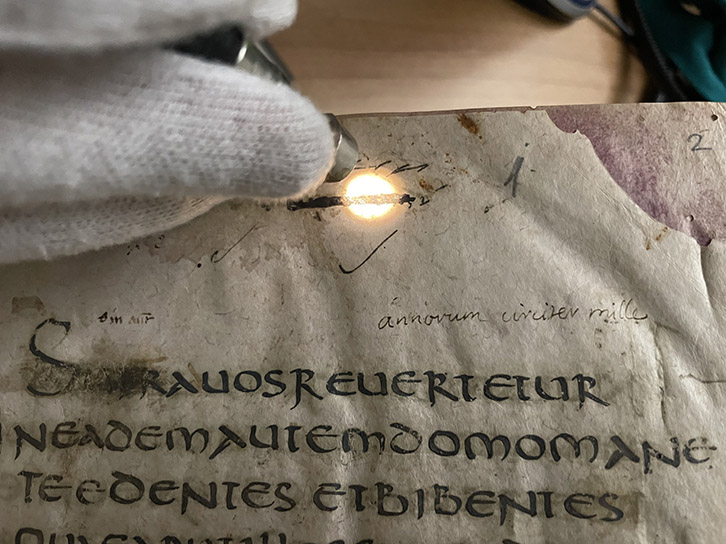
Dino-Lite setup and microphotographs from the ex-Vindobonensis Greco 2 (Biblioteca Nazionale Vittorio Emanuele III of Naples). |
|
The materials used for the manufacture of each codex were then thoroughly investigated via different analytical techniques. Spectroscopic investigations were used to characterize the purple dyes and the pictorial materials, such as the inorganic pigments and organic dyes used for the miniatures, as well as the metals used for gilding and inks. Multiband and hyperspectral imaging (HSI) were also carried out to document the state of conservation and map the materials present.
 |
 |
 |
 |
|
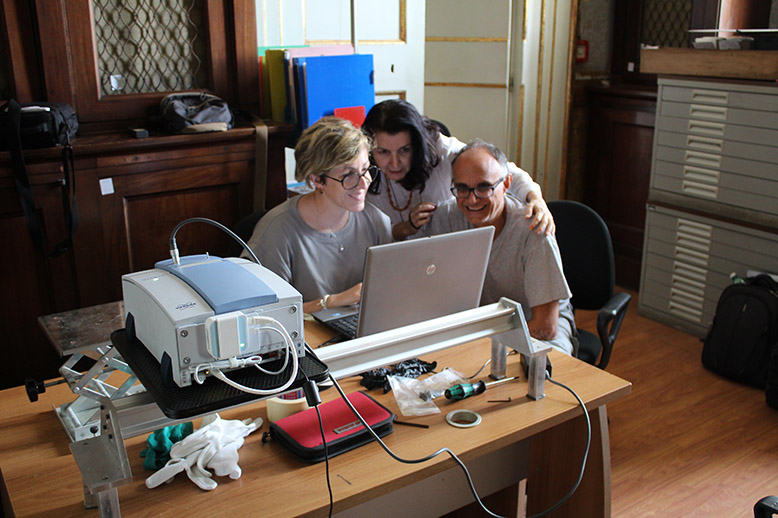
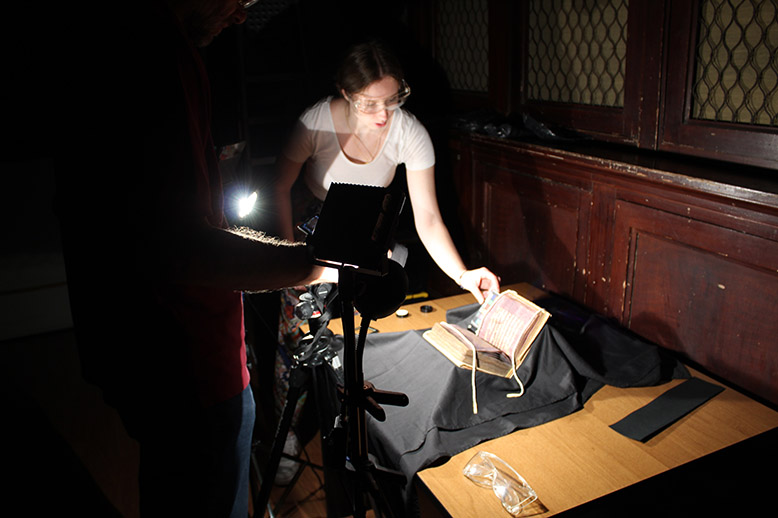
Multi-analytical investigation at the Biblioteca Nazionale Vittorio Emanuele III of Naples. FT-IR (top left), multiband imaging (top right) and FORS (bottom). |
|
The results obtained from the analytical investigations on the two purple codices (Greco 2 and Latino 3) are part of the Master's thesis by Serena Morrocchesi, Tecniche diagnostiche analitiche non invasive per lo studio di Codici Purpurei del V e del IX secolo della Biblioteca Nazionale Vittorio Emanuele III di Napoli (supervisor Dr. Marcello Picollo, co-supervisors Dr. Maurizio Aceto and Dr. Cristina Fornacelli).
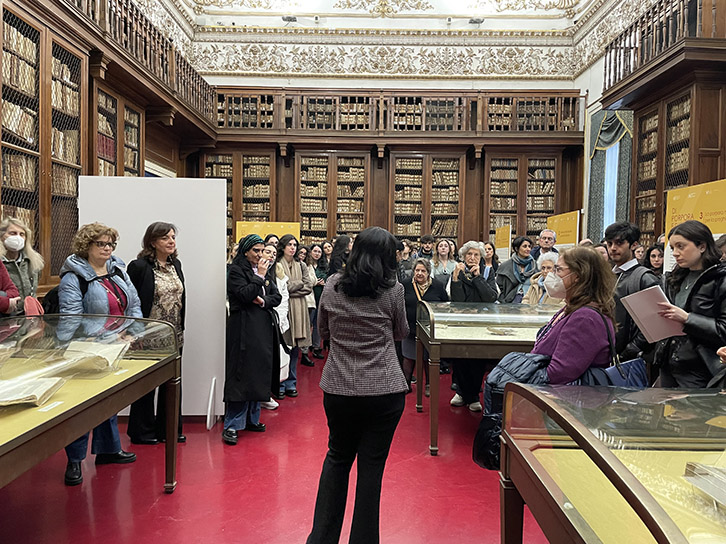
The activities carried out by the research groups of UPO and CNR-IFAC were also presented at the opening of the exhibition Di porpora e di luce, the first exhibition ever dedicated to codices with purple parchment sheets, and the preliminary results can be consulted in the exhibition catalogue (link).
 |
|
Opening of the exhibition Di porpora e di luce at the Biblioteca Nazionale Vittorio Emanuele III of Naples. |
The chemical-physical investigation of the codices made it possible to identify orchil and folium as the main organic dyes used to impart the purple color to the parchment in the late antique/early medieval and in the Renaissance codices, respectively.
Late antique and early medieval codices were also characterized by the use of metallic inks (gold and/or silver).
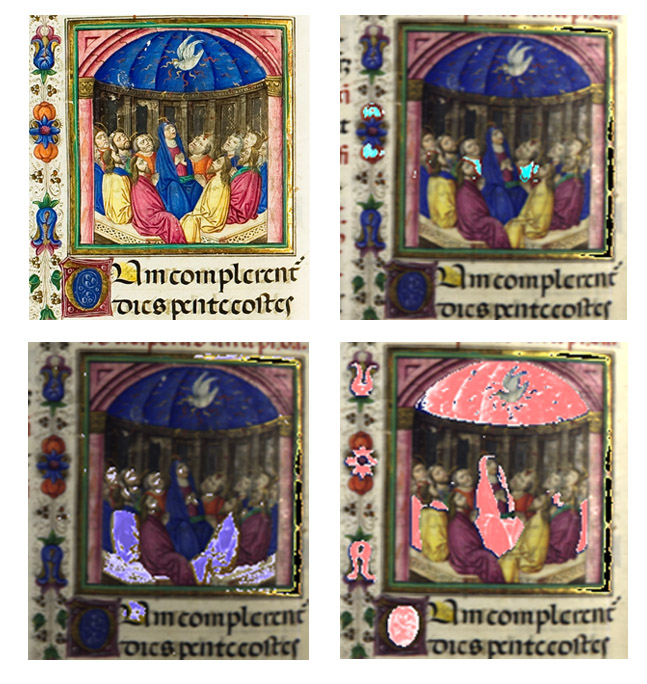
Renaissance codices, in particular, could be distinguished by the richness of their decorations and miniatures, which resulted in a more heterogeneous palette. Together with folium, animal-derived organic dyes and brazilwood were also used to color the purple sheets. The Ferrante Breviary (I.B.57) was the most elaborate manuscript. Its palette was characterized by a high heterogeneity and by the extensive use of valuable pigments and dyes, such as lapis lazuli and gold.
The Book of Hours (XIX.E.27) markedly differed from the Ferrante Breviary due to its poorer palette. Its main peculiarity is the use of silver for the flesh tones of the figures animating the numerous miniatures, and the widespread use of folium, both in the purple sheets and in the miniatures.
For the remaining codices, the composition of the palette was in agreement with that observed for the previous ones, with a few interesting exceptions, especially concerning the dye used to color the purple sheets. In Cicero's De officiis, the use of a red dye of animal origin (probably cochineal or kermes) was responsible for the distinctive pinkish color of the initial pages, while in the San Martino manuscript the use of brazilwood, probably applied with a brush, resulted in a distinctive orange color.
 |
|
Hyperspectral mapping from the Ferrante Breviary. |
Unlike the late antique and early medieval codices, where the text was written exclusively with gold and/or silver inks, the Renaissance codices were characterized by the widespread use of iron gall inks, together with vermilion and lapis lazuli. Gold and silver were only used for the decoration of initials, or to emphasize specific parts of the text.
The innovative application of hyperspectral imaging made it possible to map the use of the different materials. Multiband imaging revealed later retouching, and identified parts of the text that are no longer visible.
Keywords: Biblioteca Nazionale Vittorio Emanuele III – Naples