
Biblioteca Capitolare – Verona
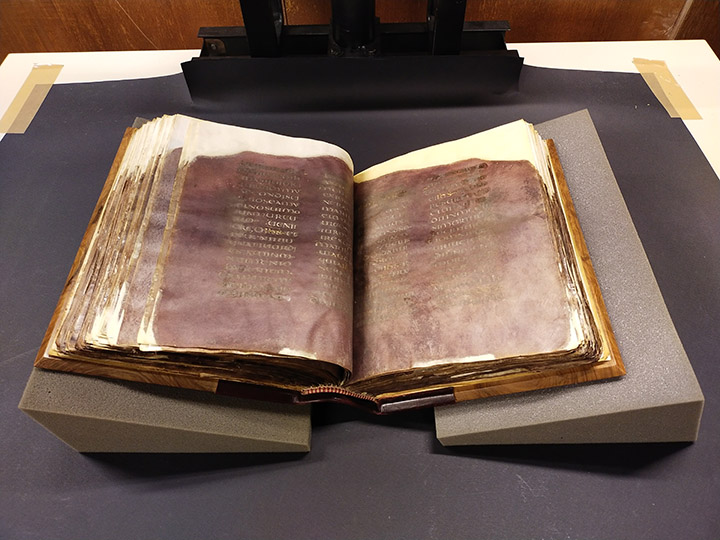
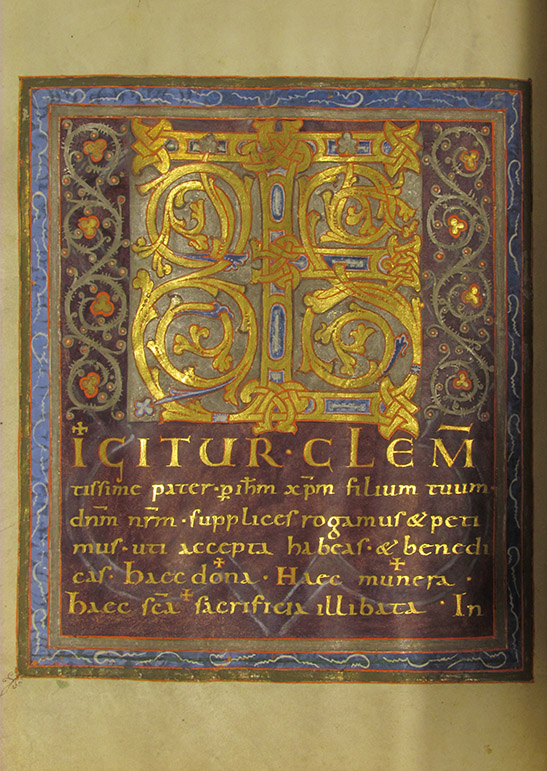
The investigations were carried out on the Evangelia VI (30), a purple codex dated to the 5th–6th century AD, and on the Sacramentarium Sancti Wolfkangi LXXXVII (82), a 10th-century AD codex with purple pages.
 |
 |
|
The Evangelia VI (30), 5th–6th century AD, and the Sacramentarium Sancti Wolfkangi LXXXVII (82), 10th century AD. |
|
Multiband imaging, FORS and XRF, together with portable optical microscopy, were used to characterize the materials (i.e. support, pigments, dyes and inks) and to document the state of conservation of both manuscripts.
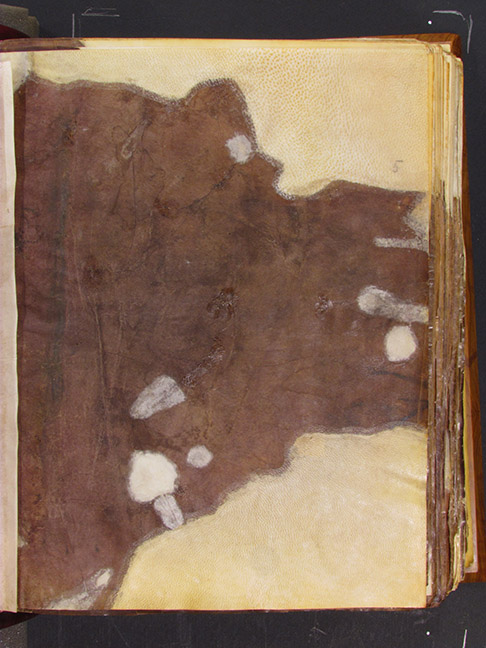
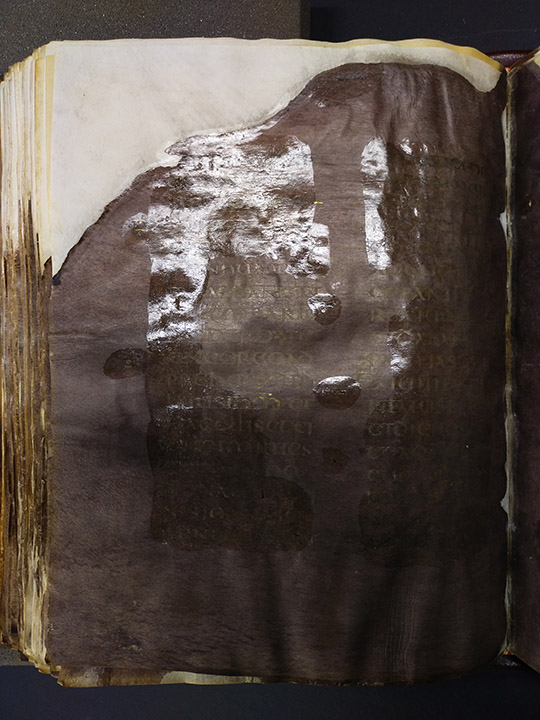
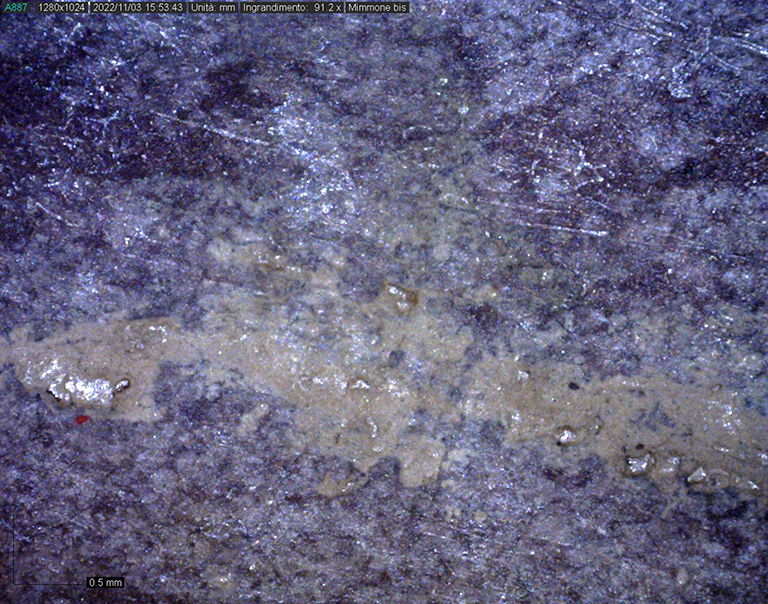
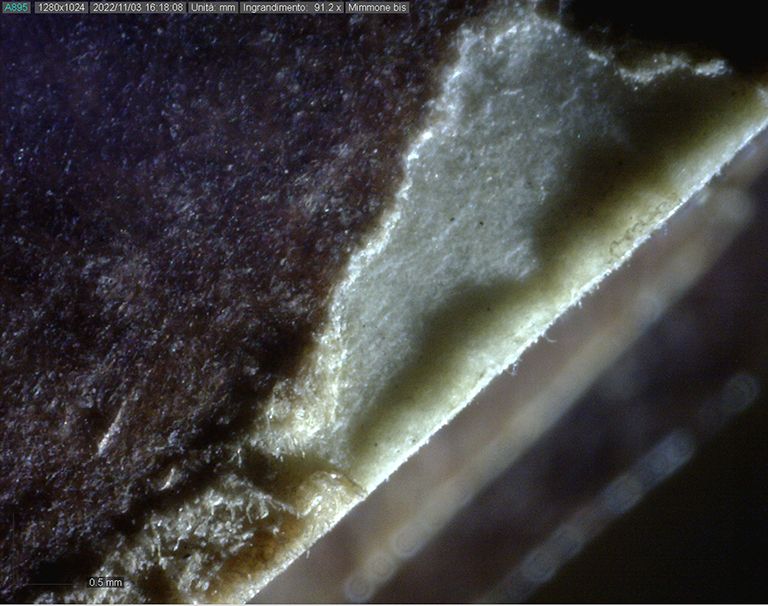
The Evangelia was characterized by the poor condition of the parchment, with large losses that were filled in during previous conservation treatments.
 |
 |
 |
 |
|
The Evangelia VI (30) at the Biblioteca Capitolare of Verona. Top: state of conservation. Bottom: microphotographs of a white deposit and of a paper infill applied to the parchment support. |
|
The analysis of the support confirmed the use of parchment, except for the infilled areas, where paper was identified. FORS also identified orchil, the alkaline extract from lichens such as Roccella tinctoria, as the dye responsible for the purple color of the parchment.
FORS also provided some preliminary indications about the nature of the inks. A gold ink was identified in the original text, while a Cu/Sn alloy was likely used for some marginal notes. Future XRF analyses, to be carried out in collaboration with Dr. Angelo Agostino (UNITO), will provide a more in-depth characterization of the chemical composition of the two inks.
 |
 |
|
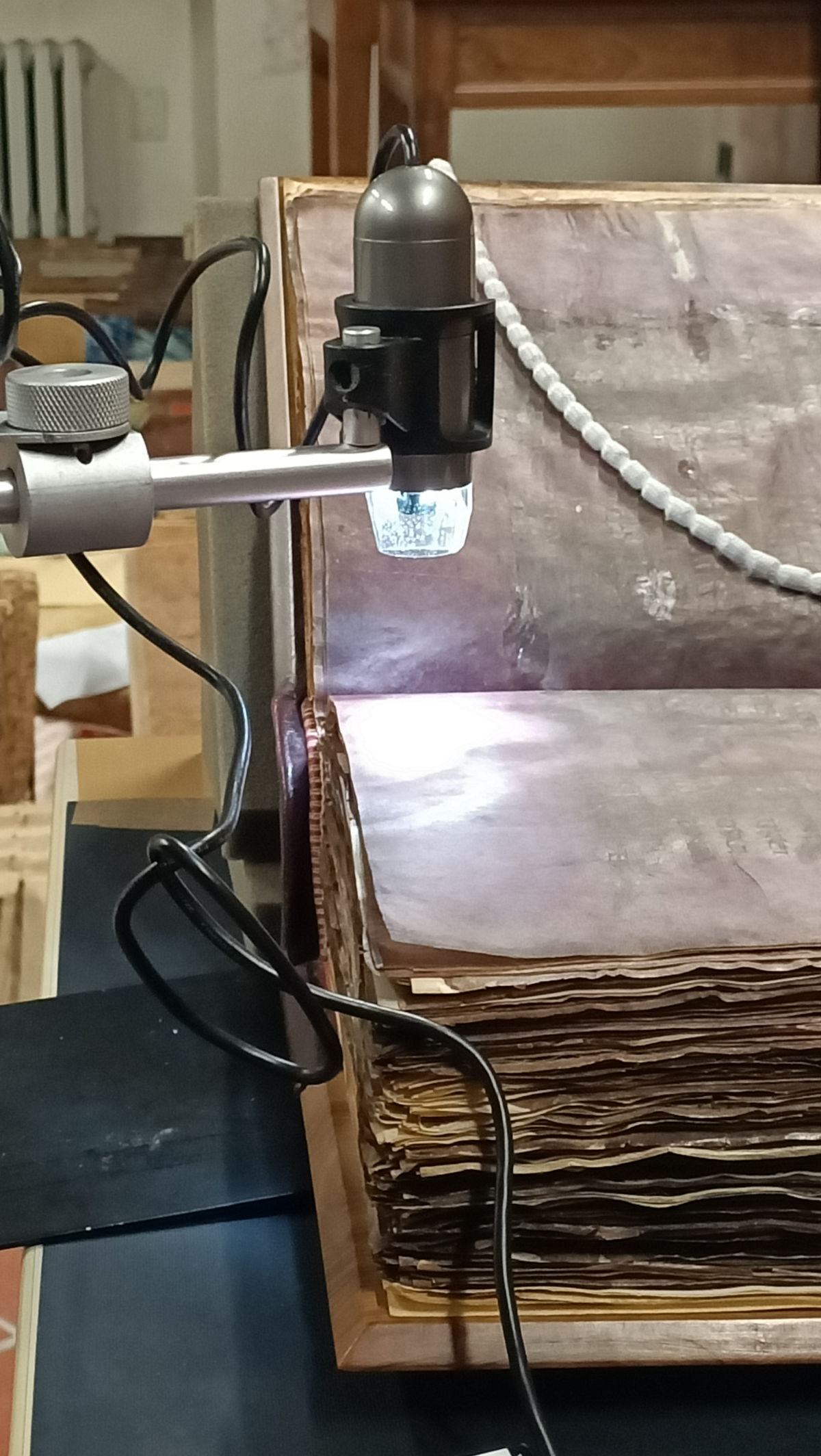
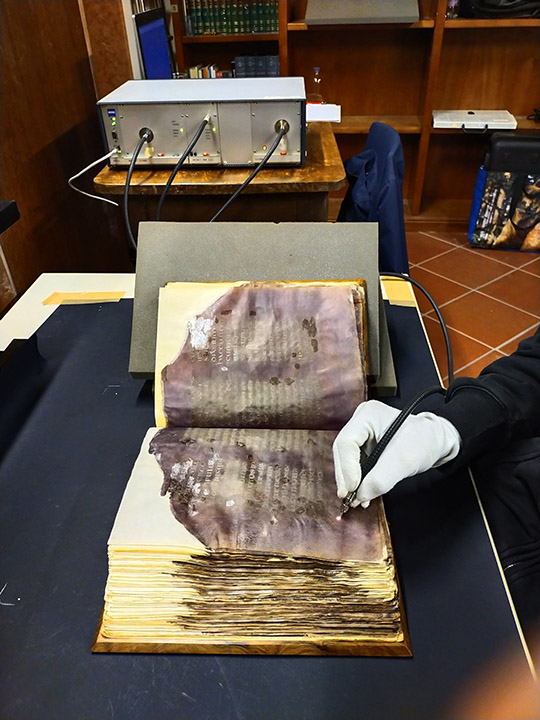
Examples of the use of portable optical microscopy and FORS for the investigation of the Evangelia VI (30). |
|
Codex LXXXVII was characterized by elaborate decorations, in which a more heterogeneous selection of materials was observed.
As in the Evangelia, orchil was used for the typical color of the purple pages, where elaborate frames and initials were also present. A mixture of a blue pigment (lapis lazuli) and a red dye was likely used to impart a dark purple color to the background of the silver text on page 233.
The use of gold and silver inks was also identified thanks to the FORS investigations. Gold leaf was also used for the decoration of the initials and/or of the external frame of the purple pages.
Lapis lazuli, alone or mixed with lead white, was identified in the blue areas, while minium was used for the orange details. The characterization of the green areas via FORS proved more complex, and further investigations are currently in progress to identify the nature of the pigments or dyes used by the miniaturist.
Keywords: Biblioteca Capitolare – Verona